Technical Analysis of Double Tops CFDs Chart Pattern in CFD
To interpret the double tops cfd chart patterns a trader needs to first learn about the technical analysis of double tops cfd chart patterns explained below.
Double Top CFDs Trading Pattern
Double tops cfd chart pattern is a reversal cfd pattern that forms after an extended upwards cfds trend.
As its name implies, this double tops cfd chart pattern formation is made up of two consecutive peaks on the cfds chart that are roughly equal, with a moderate trough in between the two peaks.
Double tops cfd pattern formation is considered complete once cfds price makes the second peak and then penetrates the lowest point between the highs, called the neckline.
The sell cfd signal from this double top cfd pattern formation occurs when the cfd market breaks-out below neck line.
In CFD, this double tops cfd pattern is used as an early warning signal that a bullish cfd trend is about to reverse.
However, double tops cfd pattern is only confirmed once the neckline is broken and the cfd market moves below the neckline.
Neck Line is just another name for last support area formed on the CFD chart.
Summary:
- Double tops cfd pattern forms after an extended move upwards- upwards cfd trend
- This double tops cfd pattern signal indicates that there will be a reversal in cfd market trend
- We sell when cfds price breaks-out below neckline: as explained on the cfd example shown below.

CFD Trade a Double Top CFDs Chart Pattern in CFD?
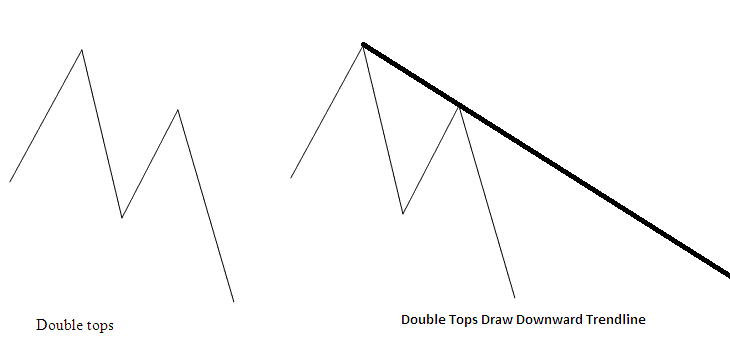
Double tops cfd pattern look like an M-Shape pattern, the best reversal cfd signal from the double top cfds pattern is where the second top is lower than the first top as shown below:
This means that the reversal cfd signal can be confirmed by drawing a downwards cfd trend line as shown below. If a trader opens a sell cfd trade using this double tops reversal cfd signal the stop loss will be placed just above this downward cfd trend line.
How to Trade the Double Tops CFDs Pattern - How Do I Analyze a Double Tops CFDs Chart Pattern in CFDs Trading
