20 Period Moving Average Strategy
A trader can choose a moving average to trade with based on the commodities chart time frame that they use for trading; a trader might choose the moving average to trade 1 minute commodities chart, 1 hour commodities chart, 4 hour commodities trading chart, day commodity chart or even weekly commodities trading chart.
A trader can also choose to average the closing commodities price, opening commodities price or median commodities price - when choosing a commodity trading moving average indicator.
Moving average commodity indicator is commonly used to measure strength of commodity trends. Data of the moving average is precise and its output as a line can be customized to the preferences of a commodity trader.
Using the moving average commodity indicator is one of the basic commodity trading strategies to generate buy & sell commodity trading signals which are used to trade in direction of the commodity trend, since the moving average indicator is a lagging indicator and a commodity trend following indicator. The Moving average commodities indicator as a lagging commodity indicator means that moving average will tend to give late commodity signals as opposed to leading commodities indicators. However, the Moving average indicator as a lagging commodity indicator gives more accurate commodity signals and is less prone to commodity trading whipsaws compared to commodity trading leading technical indicators.
Traders select the moving average period to use when trading with this moving average commodity indicator depending on the type of commodity style they use: short term, medium term and long term.
- Short term commodity: 20 Period Moving Average Strategy
- Medium term commodity: 50 Period Moving Average Strategy
- Long term commodity: 100 Period Moving Average Strategy
The period of the commodity trading moving average in can be measured in 1 minute commodities chart, 1 hour commodities chart, 4 hour commodities trading chart, day commodity chart or even weekly commodities trading chart. For our commodity strategy example we will use 1 hour commodity chart period.
Short term moving averages are sensitive to commodities price action and can identify commodity trend signals faster than the long term moving averages. Shorter term moving averages are also more prone to commodity whipsaws compared to long term moving averages.
Long term moving averages help to avoid commodity trading whipsaws, but are slower in identifying new commodity trends reversals.
Because long term moving averages calculate the average using more commodities price data points, the long term moving average does not reverse as fast as a short term moving average and it is slow to catch the changes or reversals in the commodity trend. However the longer term commodity trading moving average is better when the commodity trend stays in force for a longer time.
The task of a trader is to find a moving average period which will spot commodity trends as early as possible while at the same time avoiding fake out signals - commodity trading whipsaws. As a trader you will need to first test different commodity trading moving average periods before deciding which commodity trading moving average period is best suited for your style method based on the results of the testing that you will do using different moving averages.
Moving Average Period Strategy
Moving average commodities technical indicator is a trend following commodity indicator that is used by commodity traders for three things:
- Identifying the beginning of a new commodity trend
- Measure the sustainability of the new commodity trend
- Identify the end of a commodity trend and signal a commodity trend reversal
The moving average commodity indicator is used to smooth out the volatility of commodities price action. The moving average indicator is an overlay indicator and it is superimposed on the commodities price chart.
On the moving average commodities trading example illustrated and explained below - the blue line represents a 20 period moving average, which acts to smooth out the volatility of the commodities price action.
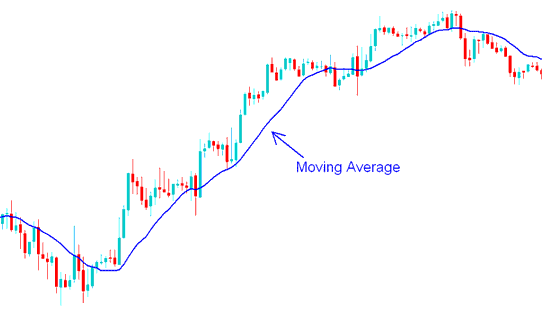
20 Period Moving Average Strategy - 50 Period Moving Average Commodities Trading Strategy - 100 Period Moving Average Strategy
Calculation of the Moving Average Commodities Price Period
The moving average is calculated as an average of commodities price using the most recent commodities price data point - commodity trading periods.
If a moving average uses the 20 period to calculate the moving average then it is referred to as a 20 period moving average, because most traders use the day commodity chart as the standard commodities price period we shall just refer to the moving average as the 20 day moving average.
To calculate the 20 day moving average the commodities price of the last 20 days is averaged - and the average is then updated constantly after every new commodities price period closes. So after every new commodities price period close is formed the average is then re-calculated afresh using the most recent 20 commodities price periods, that is why this commodity indicator is called a moving average because the average is constantly moving when commodities price data is updated and re-calculated.
