Multiple Timeframe Trading Strategy Commodity Trading
Multiple time-frame commodities trading analysis equals using 2 commodity chart time-frames to trade commodities trading - a shorter commodity chart time-frame used for trading & a longer commodity chart time frame used to check the commodity trend.
Since it's always good to follow the commodity trend when commodity, in Multiple Time Frame Commodity Trading Analysis, the longer commodity chart time-frame gives us the direction of the long term commodity trend.
If the long term commodity trend direction supports the direction of the smaller commodity chart time-frame then probability of opening a profitable commodity trade is greatly increased. This is because even if you make a mistake the long term commodity trend will eventually save you. Also if you trade with the direction of commodity trend, then mostly you will be on the winning side - this is what this Multiple Timeframe Commodity Trading Analysis is all about.
Remember there is a popular saying by many commodity traders that says: "The commodity trend is your friend" - never go against the commodity trend when trading.
There are four different types of commodity traders - all these different types of commodity traders use different chart time-frames to trade as shown below.
Examples of how each type of Commodities trader uses multiple Commodity chart Time-frames analysis strategy:
Commodity Trading Scalpers
Scalpers hold on to their commodities trades for only a few minutes. The scalper commodity trader never holds onto a commodity trading trade for more than 10 minutes. With the objective of making small amounts of pips as profit, 5 to 15 pips.
A Scalper using 1 min commodity chart wants to go long, checks 5 minutes commodities trading chart, which looks like the one below, since 5 minute commodity chart show commodity trend is heading upwards, then decides from this commodities trading technical analysis it is okay to open a buy commodities trade transaction.

Multi Chart Timeframe Scalping Commodity Trading
Commodities Day Traders
Day commodity traders hold on to their open commodities trades for a few hours but not more than a day. With the aim to make quite a number of pips profit, 30 to 60 pips.
Commodity day trader trading 15 minute commodity chart wants to go long, checks 1 hour commodities trading chart, which looks like the commodity chart below, since 1 hour commodity chart shows commodity trend is heading upwards, then decides from this commodities trading technical analysis it is okay to open a buy commodities trade transaction.
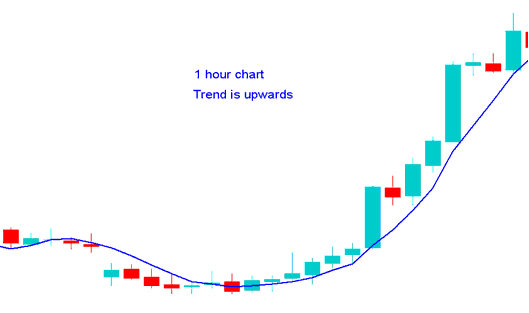
Multi Chart Timeframe Day Commodity Trading - Multi Chart Timeframe Intraday Commodity Trading
Swing Traders
Swing commodity traders hold on to their open commodities trades for a few days to a week. With the aim to make a large number of pips profit, 100 to 250 pips.
Swing trader using 1 hour commodity chart wants to go short, checks 4 hour commodities trading chart, which looks like the commodity chart example illustrated and explained below, since 4 hour commodity chart shows the commodity trend is heading downwards, then decides from this commodities trading technical analysis it is okay to open a sell commodities trade transaction.
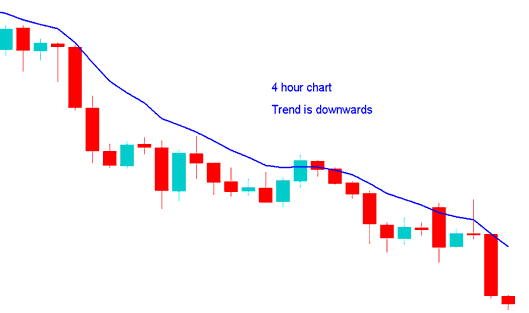
Multi Chart Timeframe Swing Commodity Trading - Multi Chart Timeframe Swing Commodity Trading
Position Commodities Traders
Position commodity traders are traders that hold onto their commodities trades for weeks or months. With the aim to make a large number of pips profit, 300 to 800 pips.
Position commodity trader using the daily commodity chart wants to go short, checks weekly commodities trading chart, weekly looks like the commodity chart examples illustrated and explained below, since weekly commodity chart shows the commodity trend is heading downwards, then decides from this commodities trading technical analysis it is okay to open a sell commodities trade transaction.
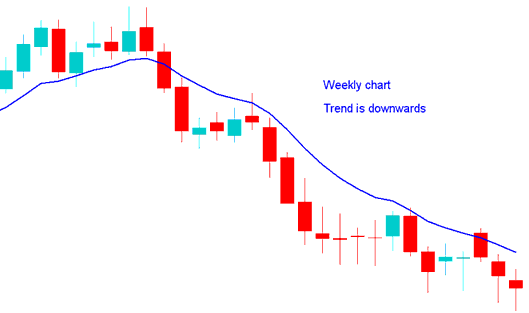
Multi Chart Timeframe Positional Commodity Trading
How to Define A Commodity Trend
Using a commodity system that has 3 commodities technical indicators - Moving Averages Crossover System, RSI Commodity Indicator and MACD Commodity Indicator - and uses simple rules to define the commodity trend. The rules are:
Upwards Commodities Trend
Both Moving Averages Moving Up
RSI Commodities Indicator Above 50
MACD Commodities Technical Indicator Above Centerline
Downwards Commodity Trend
Both Moving Averages Moving Down
RSI Commodities Technical Indicator Below 50
MACD Commodities Indicator Below Centerline