Pin bar cfds price action method
A pin bar is a reversal cfd signal on a cfd chart which shows an obvious change in sentiment during that period.
This bar has a long tail with the closing cfds price near the open.
The bar looks like a pin thus its name Pin Bar - occurs after an extended move up or down.
This reversal is confirmed after market closes below the candle that precedes this pattern. Below the reversal is confirmed after the cfd market closes below the blue candle that preceded this candle.
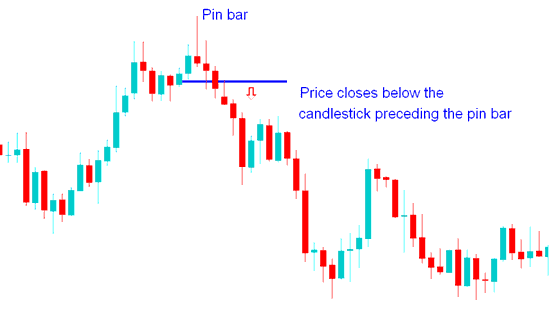
Combining with line studies:
This signal can be combined with other line studies such as Support and Resistance levels, Fibonacci retracement levels and cfd trend-lines can be used together with this cfd signal to generate buy or sell cfds trades.
Support and resistance
A pin bar that forms after cfds price hits an important support or resistance level can be used as a signal to enter the cfds market. When this pattern forms the trades taken should be in the opposite direction of the tail.
If the cfd market moves up this forms a pin bar with tall upper tail, then the signal is to short.
If the cfd market moves down the forms a pin bar with tall lower tail, then the signal is to long.
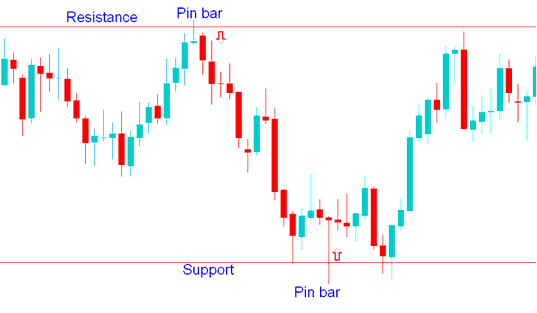
Combining With Support & Resistance
CFD Trendlines and moving averages
Pin bars that form after cfds price touches a cfd trend line or moving average can be used as signals to enter the cfds market.
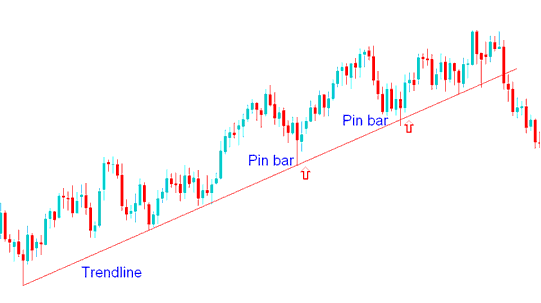
Combining With CFD Trend Lines
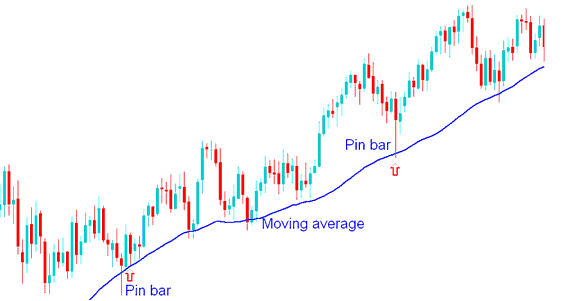
Combining With Moving Averages
CFDs Fib Retracement Levels
Pin bars that form after cfds price touches a Fibonacci retracement level can also be used as signals to enter the cfds market.
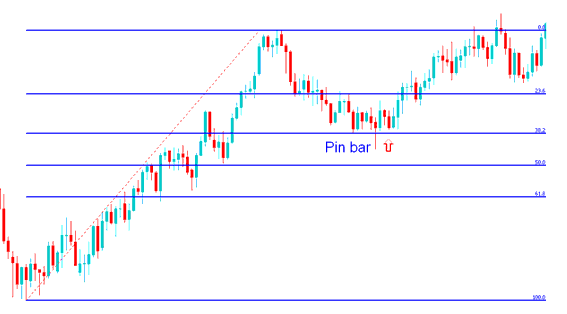
Combining With CFDs Fibonacci Retracement Levels
These patterns are often formed near extremes in market swings, and they often occur at after false breaks. This is why this pattern is used to place trades in the opposite direction of the tail.